
Bridging the Digital Divide in Africa: Challenges and Solutions
In 2025, Africa stands at a critical crossroads. While the continent is experiencing rapid digital growth, over 400 million people still lack reliable internet access. This gap known as the digital divide continues to limit access to education, jobs, healthcare, and economic opportunities. Understanding Bridging the Digital Divide in Africa: Challenges and Solutions is essential for anyone committed to inclusive growth and sustainable development in Nigeria and across the continent.
The digital divide is not just a technology issue, it is a development challenge. However, with the right strategies, partnerships, and investments in digital skills training, Africa can unlock its full potential and create a more inclusive digital future.

What is the Digital Divide?
The digital divide refers to the gap between individuals and communities that have access to digital technologies and those that do not.
It includes disparities in:
- Internet connectivity
- Access to digital devices
- Digital literacy and skills
- Access to online opportunities
Bridging this gap is key to achieving SDGs through technology, especially in education, economic growth, and innovation.
The Current State of the Digital Divide in Africa
Despite progress, many rural and underserved communities in Africa remain disconnected.
Key Statistics (2024–2026):
- Over 50% of rural Africans lack reliable internet access
- Millions of youth lack basic digital skills training
- Women and girls are disproportionately affected by digital exclusion
- High data costs remain a major barrier
These challenges directly impact community empowerment initiatives Nigeria and limit participation in the global economy.
Major Challenges Driving the Digital Divide
To effectively address the issue, we must understand its root causes.
- Limited Infrastructure
Many rural areas lack:
- Broadband connectivity
- Electricity
- Mobile network coverage
Without infrastructure, digital access remains impossible.
- High Cost of Internet and Devices
For many households, smartphones, laptops, and data plans are unaffordable.
This limits participation in digital empowerment programs Africa.
- Low Digital Literacy
Even when access exists, many individuals lack the skills to use technology effectively.
This highlights the urgent need for innovative technology training programs.
- Gender Inequality
Women and girls face additional barriers, including:
- Cultural restrictions
- Limited access to education
- Financial constraints
Closing this gap is essential for inclusive growth.
- Funding and Policy Gaps
Many communities struggle with:
- Limited investment in digital infrastructure
- Lack of awareness of how to get funding for sustainable projects Nigeria
- Weak policy implementation
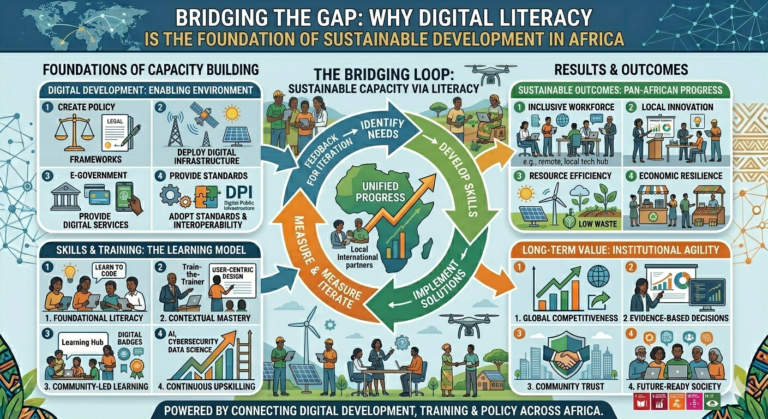
Solutions: How to Bridge the Digital Divide in Africa
Now that we understand the challenges, let’s explore practical, scalable solutions.
- Expanding Digital Infrastructure
Governments and private sector partners must invest in:
- Rural broadband networks
- Affordable internet services
- Renewable energy solutions for off-grid areas
This supports both connectivity and sustainable development in Nigeria.
- Promoting Affordable Access
To ensure inclusivity:
- Subsidize data costs
- Provide low-cost devices
- Establish community tech hubs
These initiatives are critical for scaling digital empowerment programs Africa.
- Investing in Digital Skills Training
Access alone is not enough, people need skills.
Key actions:
- Provide beginner-friendly digital skills training
- Integrate digital education into school systems
- Offer community-based learning programs
This is one of the most effective ways to bridge the divide.
- Supporting Women and Marginalized Groups
Inclusive programs should:
- Target women and girls
- Provide scholarships and mentorship
- Promote gender equality in tech
Empowering women strengthens community empowerment initiatives Nigeria.
- Leveraging Public-Private Partnerships
Collaboration is key.
Stakeholders include:
- Governments
- NGOs
- Private companies
- International organizations
Together, they can scale solutions and drive achieving SDGs through technology.
- Encouraging Innovation and Local Solutions
African innovators are best positioned to solve local challenges.
Examples:
- Mobile-based learning platforms
- Offline digital tools
- Local language content
These solutions are often developed through innovative technology training programs.
Practical Steps Individuals Can Take
You don’t need to wait for large-scale change, you can take action today.
Here’s how:
- Start Learning Digital Skills
Use free resources and enroll in digital skills training programs. - Share Knowledge
Teach others in your community basic digital skills. - Use Available Tools
Leverage smartphones for learning, business, and communication. - Join Empowerment Programs
Participate in digital empowerment programs Africa. - Seek Funding Opportunities
Learn how to get funding for sustainable projects Nigeria to scale your ideas.
Real-Life Impact: Bridging the Gap in Action
Case Study 1: Rural Digital Training Programs
In several Nigerian communities, youth trained in digital skills are now earning income through freelancing and online businesses.
Case Study 2: Women in Tech Initiatives
Programs targeting women have helped thousands gain digital literacy, improving family income and community development.
Case Study 3: Tech in Agriculture
Farmers using mobile technology are increasing productivity and accessing better markets, supporting sustainable development in Nigeria.
How CIFSAD is Bridging the Digital Divide
CIFSAD is at the forefront of efforts to close the digital gap across Nigeria and Africa.
- Comprehensive Digital Skills Training
CIFSAD provides accessible digital skills training that equips individuals with practical, job-ready skills.
- Innovative Technology Training Programs
Through innovative technology training programs, CIFSAD empowers learners to:
- Build digital solutions
- Start businesses
- Solve community challenges
- Sustainability Consulting Nigeria
CIFSAD offers expert sustainability consulting Nigeria, helping communities adopt:
- Climate-smart solutions
- Renewable energy technologies
- Sustainable business practices
- Community Empowerment Initiatives
CIFSAD leads impactful community empowerment initiatives Nigeria, focusing on:
- Youth development
- Women empowerment
- Rural inclusion
- Supporting SDGs Through Technology
CIFSAD aligns its work with global goals, promoting:
- Quality Education
- Clean Energy
- Industry, Innovation, and Infrastructure
This ensures long-term, sustainable impact.
Overcoming Barriers to Digital Inclusion
To successfully bridge the digital divide, stakeholders must address:
Infrastructure Gaps
Invest in connectivity and energy solutions.
Skill Gaps
Scale digital skills training programs nationwide.
Financial Barriers
Promote access to funding and affordable tools.
Awareness Issues
Educate communities about opportunities and resources.
The Future of Digital Inclusion in Africa
The future is promising.
Key Trends:
- Expansion of mobile internet
- Growth of tech hubs and innovation centers
- Increased investment in digital infrastructure
- Rising demand for digital skills
Bridging the digital divide will unlock massive opportunities for economic growth, innovation, and sustainable development in Nigeria.
Key Takeaways
- The digital divide remains a major barrier to development in Africa
- Challenges include infrastructure gaps, high costs, and low digital literacy
- Solutions include investment in infrastructure, skills training, and inclusive programs
- Individuals can take action by learning and sharing digital skills
- Organizations like CIFSAD are leading efforts to bridge the gap
Be Part of the Solution
Bridging the digital divide is not just a goal, it is a responsibility. And you can be part of the change.
CIFSAD is ready to equip you with the skills, knowledge, and support needed to thrive in the digital age.
👉 Visit https://cifsad.com.ng/ today to:
- Apply for digital skills training programs
- Join community empowerment and sustainability initiatives
- Access expert sustainability consulting Nigeria
- Explore partnerships and innovation opportunities
- Book workshops and personalized training
Don’t wait for change, be the change. Apply now, get involved, and help bridge the digital divide in Africa today.