
The Role of African Leadership in Promoting Technology Across Africa
Africa stands at a defining moment in its development journey. With one of the world’s youngest populations, rapidly growing digital adoption, and increasing innovation across industries, the continent has enormous potential to become a global technology powerhouse. However, achieving this vision depends largely on effective leadership. The role of African leadership in promoting technology across Africa is critical for accelerating economic growth, creating jobs, improving education, advancing sustainable development, and empowering future generations.
As governments, institutions, development organizations, and private sector leaders seek solutions to Africa’s most pressing challenges, technology has emerged as a powerful tool for transformation. From digital skills training and artificial intelligence to fintech, e-learning, and smart governance, technology is reshaping how Africans learn, work, and solve problems.
Organizations such as CIFSAD are helping drive this transformation by equipping individuals and communities with digital skills and innovative technology solutions that support sustainable development across Africa.
Understanding the Role of African Leadership in Promoting Technology Across Africa
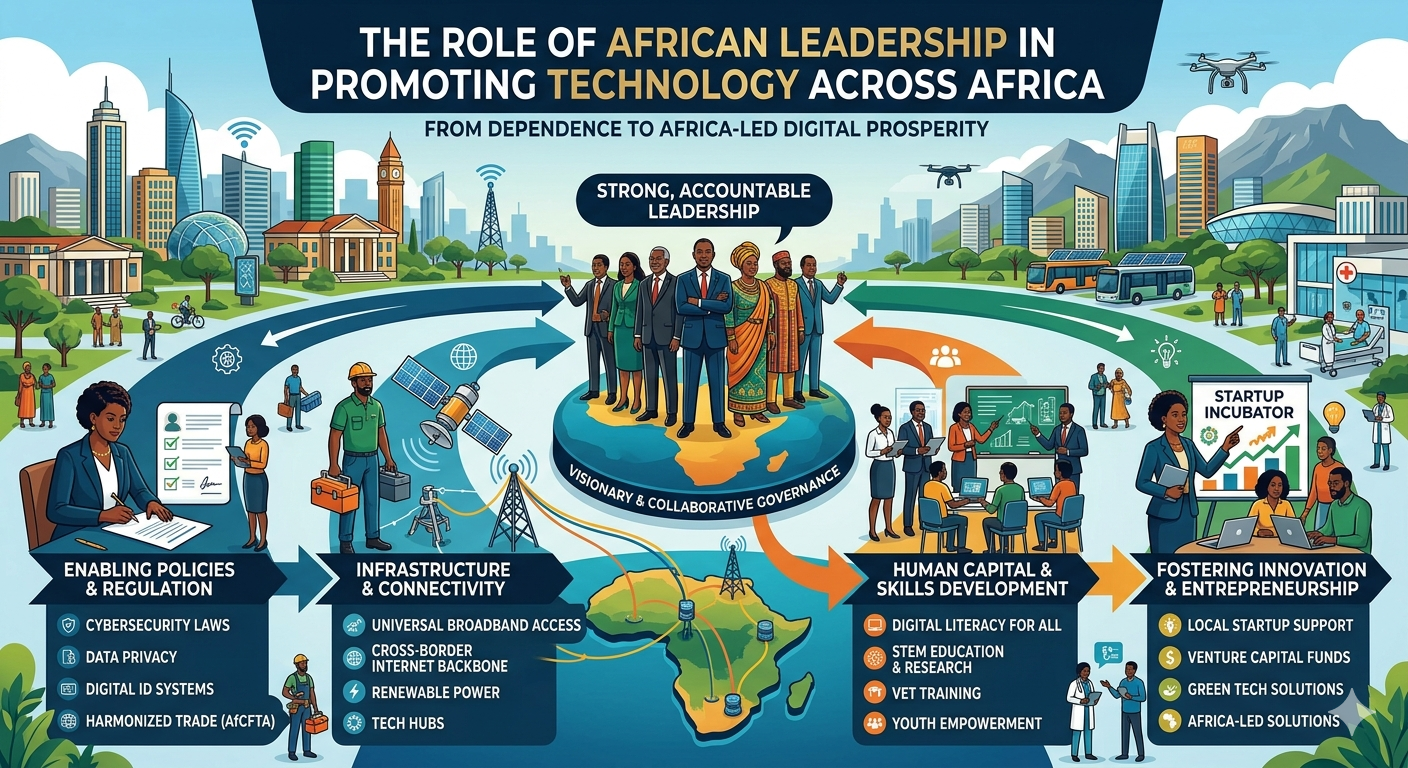
The role of African leadership in promoting technology across Africa extends beyond policy-making. Effective leaders create environments where innovation can flourish, entrepreneurs can thrive, and communities can access opportunities that improve their quality of life.
Technology-driven development requires leaders who can:
- Invest in digital infrastructure
- Promote innovation and entrepreneurship
- Support technology education
- Encourage public-private partnerships
- Expand internet accessibility
- Develop digital inclusion policies
- Strengthen technology ecosystems
Countries that prioritize these areas are better positioned to compete in the global digital economy and achieve long-term sustainable development goals.
Why Technology Matters for Africa’s Future
Technology is no longer a luxury; it is a necessity for development.
Across Africa, digital solutions are helping to address challenges in:
Education
Online learning platforms, virtual classrooms, and digital skills training programs are expanding access to quality education, particularly in underserved communities.
Employment
Technology creates opportunities in software development, digital marketing, data analysis, cybersecurity, artificial intelligence, and other high-demand sectors.
Healthcare
Telemedicine, digital health records, and AI-powered diagnostics are improving healthcare delivery and accessibility.
Agriculture
Digital platforms help farmers access market information, weather forecasts, financial services, and modern farming techniques.
Governance
Technology promotes transparency, accountability, and efficient service delivery in both public and private sectors.
The widespread adoption of these solutions depends heavily on visionary leadership that prioritizes innovation and invests in future-ready systems.
Key Challenges Limiting Technology Growth in Africa
Despite significant progress, several barriers continue to slow technological advancement across the continent.
Digital Skills Gap
Many young Africans lack the practical digital skills required to compete in today’s job market.
This skills gap affects:
- Employment opportunities
- Business growth
- Innovation capacity
- Economic competitiveness
Inadequate Infrastructure
Reliable internet connectivity and stable electricity remain challenges in many regions.
Limited Funding for Innovation
Many startups and technology initiatives struggle to access capital needed for growth and expansion.
Unequal Access to Technology
Rural communities often have fewer opportunities to benefit from digital transformation compared to urban populations.
Lack of Technology-Focused Policies
Inconsistent regulations and limited support for innovation can discourage investment and slow progress.
Addressing these challenges requires strong leadership, strategic investments, and collaborative action.
How African Leaders Can Accelerate Technology Adoption
1. Prioritize Digital Skills Development
One of the most effective ways to promote technology is by investing in people.
Digital literacy and technical skills are essential for:
- Employment
- Entrepreneurship
- Innovation
- Economic growth
Leaders should support programs that provide training in:
- Digital literacy
- Software development
- Artificial intelligence
- Data analytics
- Cybersecurity
- Digital entrepreneurship
Organizations such as CIFSAD are helping bridge this gap by empowering individuals with essential digital skills needed for success in the modern economy.
2. Expand Access to Technology Infrastructure
Technology cannot thrive without reliable infrastructure.
Governments and development partners should prioritize:
- Broadband expansion
- Rural internet connectivity
- Renewable energy solutions
- Technology hubs
- Innovation centers
Improved infrastructure enables more people to participate in the digital economy.
3. Promote Innovation and Entrepreneurship
Africa is home to thousands of innovative entrepreneurs solving local challenges through technology.
Leaders can support innovation by:
- Creating startup-friendly policies
- Offering innovation grants
- Supporting incubators and accelerators
- Encouraging research and development
- Facilitating access to investment
Innovation ecosystems create opportunities for job creation and sustainable economic growth.
4. Foster Public-Private Partnerships
Technology development requires collaboration between:
- Governments
- Educational institutions
- Development organizations
- Private companies
- International partners
Public-private partnerships help mobilize resources, expertise, and investment needed for large-scale impact.
5. Promote Inclusive Technology Access
Technology should benefit everyone, including:
- Women
- Youth
- Persons with disabilities
- Rural communities
- Marginalized groups
Inclusive digital transformation ensures that no one is left behind in Africa’s development journey.
The Connection Between Technology and Sustainable Development
Technology plays a crucial role in achieving the United Nations Sustainable Development Goals (SDGs).
Digital solutions support progress in areas such as:
Quality Education (SDG 4)
Online learning platforms and digital training programs expand educational opportunities.
Decent Work and Economic Growth (SDG 8)
Technology creates new jobs and supports entrepreneurship.
Industry, Innovation, and Infrastructure (SDG 9)
Digital transformation strengthens innovation ecosystems and modern infrastructure.
Reduced Inequalities (SDG 10)
Technology improves access to information and economic opportunities.
Partnerships for the Goals (SDG 17)
Digital platforms facilitate collaboration among stakeholders working toward sustainable development.
African leaders who embrace technology can accelerate progress toward these goals while improving lives across the continent.
Success Stories Driving Africa’s Digital Transformation
Fintech Revolution
Africa has become a global leader in mobile financial services. Millions of people now access banking, payments, and financial products through digital platforms.
E-Learning Growth
Digital learning platforms are expanding access to education and professional development opportunities for students and workers across Africa.
Tech Innovation Hubs
Innovation centers throughout Africa are nurturing startups and creating solutions tailored to local challenges.
Digital Skills Programs
Technology training initiatives continue to equip young people with employable skills that improve livelihoods and economic participation.
These successes demonstrate the positive impact of technology when supported by visionary leadership and strategic investments.
How CIFSAD Is Supporting Africa’s Technology-Driven Future
As conversations about the role of African leadership in promoting technology across Africa continue to evolve, CIFSAD stands out as a pioneering organization dedicated to creating transformative opportunities through technology.
Empowering Communities Through Digital Skills Training
CIFSAD equips individuals with practical digital competencies needed to succeed in today’s rapidly changing world.
Its training initiatives focus on:
- Digital literacy
- Technology adoption
- Workforce readiness
- Innovation skills
- Professional development
By building digital capacity, CIFSAD helps participants unlock new opportunities for employment, entrepreneurship, and community development.
Delivering Innovative Technology Solutions
CIFSAD develops and supports technology-driven initiatives that address real-world challenges across Africa.
These solutions promote:
- Economic empowerment
- Social inclusion
- Sustainable development
- Community resilience
Supporting Sustainable Development Goals
CIFSAD aligns its programs with the SDGs, ensuring that technology serves as a catalyst for meaningful and measurable impact.
Its projects contribute to:
- Education advancement
- Economic growth
- Innovation development
- Partnership building
- Community transformation
Creating Opportunities Through Workshops and Internships
CIFSAD provides workshops, mentorship opportunities, and internship programs that connect participants with industry knowledge and practical experience.
These initiatives help prepare the next generation of African leaders and innovators.
Building Strategic Partnerships
Collaboration is central to CIFSAD’s mission.
Through partnerships with organizations, institutions, and stakeholders across Africa, CIFSAD expands its reach and strengthens its impact.
Best Practices for Future African Leaders
To maximize technology’s potential, current and future leaders should:
- Invest consistently in digital education.
- Support innovation ecosystems and startups.
- Expand internet and technology infrastructure.
- Promote inclusive technology access.
- Encourage research and development.
- Strengthen partnerships across sectors.
- Align technology initiatives with sustainable development goals.
- Create policies that encourage innovation while protecting users.
By implementing these strategies, African leaders can accelerate digital transformation and create lasting opportunities for millions of people.
Conclusion
The role of African leadership in promoting technology across Africa is one of the most important factors shaping the continent’s future. Strong leadership can unlock innovation, expand digital access, create jobs, improve education, and accelerate sustainable development.
Technology is not merely changing industries—it is transforming lives. However, realizing its full potential requires visionary leaders, strategic investments, inclusive policies, and organizations committed to empowering communities through innovation.
Among these organizations, CIFSAD continues to lead by example, equipping individuals with digital skills, supporting sustainable development initiatives, fostering innovation, and creating opportunities that drive meaningful change across Africa.
Join CIFSAD in Building Africa’s Digital Future
Africa’s future depends on leaders, innovators, and communities working together to harness the power of technology.
Whether you are a student, professional, entrepreneur, development practitioner, organization, or potential partner, now is the time to become part of Africa’s digital transformation journey.
Visit CIFSAD today to learn more about its digital skills training programs, innovative technology initiatives, sustainable development projects, internships, partnerships, and community empowerment opportunities.
Together, we can build a more innovative, inclusive, and sustainable Africa—one empowered by technology and driven by visionary leadership.