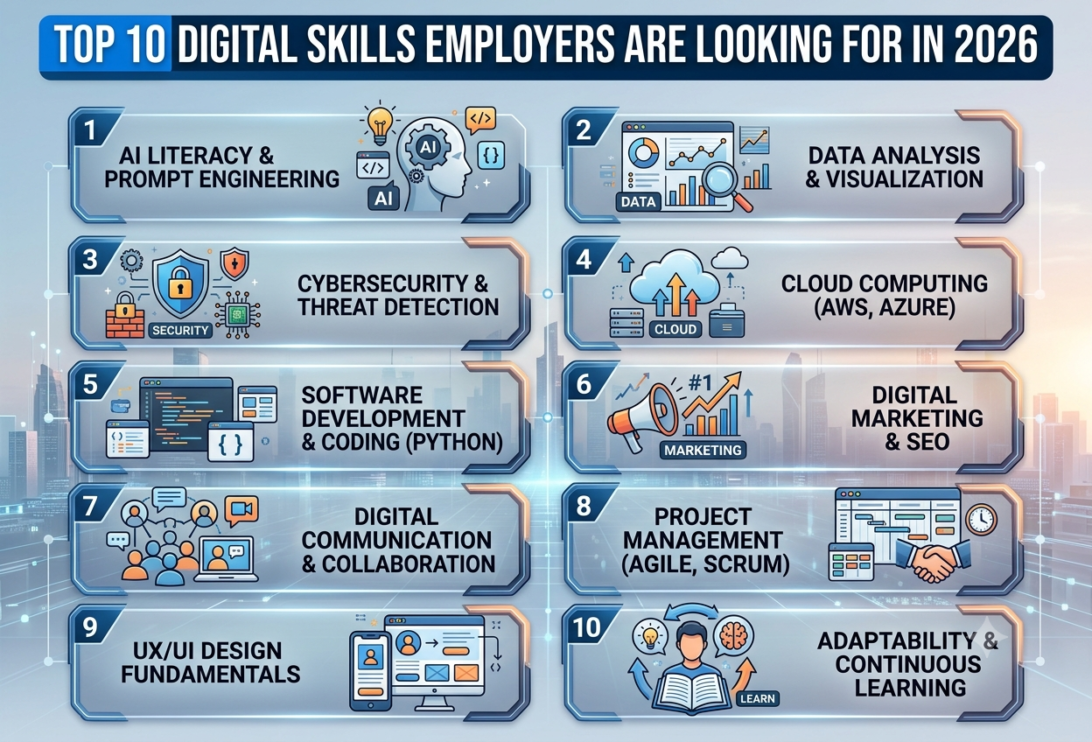
Top 10 Digital Skills Employers Are Looking for in 2026
Introduction: The Future of Work Is Already Changing
Across Africa, the job market is undergoing one of the fastest transformations in history. By 2026, over 70% of employers globally will prioritize candidates with strong digital capabilities, according to 2024–2026 workforce development trends. In Nigeria alone, companies are increasingly shifting toward automation, remote work, and data-driven decision-making.
Yet, a major challenge remains: millions of young people still lack access to structured digital skills training needed to compete in this evolving economy.
This is where CIFSAD plays a vital role, equipping individuals with future-ready skills through digital empowerment programs Africa needs for inclusive growth, innovation, and sustainability.
This guide explores the Top 10 Digital Skills Employers Are Looking for in 2026, why they matter, and how you can develop them to build a successful career in a rapidly changing digital world.
The Digital Skills Gap in Africa: Why It Matters Now
Africa has the youngest population in the world, yet it also faces a widening skills gap. Employers are struggling to find candidates with job-ready digital competencies, while millions of graduates remain unemployed.
Key challenges include:
- Limited access to innovative technology training programs
- Weak digital infrastructure in rural communities
- Low exposure to global digital tools
- High unemployment among youth
- Limited awareness of community empowerment initiatives Nigeria
This gap directly affects sustainable development in Nigeria, slowing progress in innovation, job creation, and economic diversification.
Why Digital Skills Matter More Than Ever in 2026
Digital skills are no longer optional, they are essential for survival in the modern workforce.
Employers now prioritize candidates who can:
- Work remotely across global teams
- Use AI-powered tools effectively
- Analyze and interpret data
- Solve real-world business problems
- Adapt to fast-changing technologies
These skills also contribute to achieving SDGs through technology, especially SDG 4 (Quality Education), SDG 8 (Decent Work), and SDG 9 (Industry and Innovation).
Top 10 Digital Skills Employers Are Looking for in 2026
- Artificial Intelligence (AI) Literacy
AI is transforming every industry from healthcare to agriculture.
Employers want candidates who can:
- Understand AI tools and applications
- Use AI for productivity and automation
- Work with AI-powered platforms
AI literacy is becoming essential in digital skills training programs across Africa.
- Data Analysis and Interpretation
Data is now the backbone of decision-making.
Key skills include:
- Excel and Google Sheets proficiency
- Data visualization tools (Power BI, Tableau)
- Basic statistics understanding
Businesses rely on data to improve performance, making this one of the most in-demand skills in 2026.
- Digital Marketing and Social Media Strategy
Every business now depends on online visibility.
Employers seek skills in:
- Social media management
- SEO optimization
- Content marketing
- Paid advertising (Meta Ads, Google Ads)
This is especially important for youth unemployment digital skills Africa, where freelancing and remote marketing roles are growing rapidly.
- Software Development and Coding
Coding remains one of the most powerful digital skills.
Popular programming areas:
- Web development (HTML, CSS, JavaScript)
- Mobile app development
- Backend systems
This skill supports innovative technology training programs that prepare youth for global tech jobs.
- Cybersecurity Awareness
As digital systems grow, so do security threats.
Employers need professionals who can:
- Identify cyber risks
- Protect digital assets
- Ensure safe online transactions
Cybersecurity is now critical for businesses, governments, and NGOs.
- Cloud Computing Skills
Cloud technology powers modern businesses.
Key tools include:
- AWS (Amazon Web Services)
- Microsoft Azure
- Google Cloud Platform
Cloud skills are essential for remote work and scalable business operations.
- UI/UX Design (User Experience Design)
Good design drives customer satisfaction.
Employers look for:
- Website and app design skills
- User research abilities
- Prototyping tools (Figma, Adobe XD)
This skill bridges creativity and technology in digital careers.
- Digital Project Management
Organizations need professionals who can manage digital workflows.
Skills include:
- Agile methodology
- Task management tools (Trello, Asana)
- Team coordination in remote environments
This is crucial for startups and global teams.
- Content Creation and Video Production
Content is the engine of the internet economy.
Employers value:
- Video editing skills
- Storytelling ability
- Social media content production
This is one of the fastest-growing career paths in Africa.
- Sustainability and Green Technology Skills
A rising global priority is sustainability.
Employers increasingly want professionals who understand:
- Climate-smart solutions
- Renewable energy systems
- Environmental impact tools
This aligns with sustainable development in Nigeria and supports green energy training programs Nigeria.
How to Build These Skills Successfully
To succeed in the digital economy, structured learning is essential.
Step-by-step approach:
- Start with foundational learning
- Computer basics
- Internet literacy
- Communication tools
- Enroll in structured programs
Join digital skills training programs that offer practical experience.
- Specialize in one or two skills
Focus improves mastery and employability.
- Build a portfolio
Show real projects to employers.
- Gain experience
Internships, freelancing, and volunteering matter.
Funding and Opportunities for Digital Growth
Many learners struggle due to financial limitations.
However, opportunities exist through:
- Government empowerment programs
- NGO initiatives
- Private sector grants
- Startup incubators
- how to get funding for sustainable projects Nigeria programs
These opportunities support youth entering digital careers and entrepreneurship.
Case Studies: Real Impact of Digital Skills in Africa
Case Study 1: Youth Digital Training Program
A CIFSAD-inspired initiative trained over 500 young people in digital skills.
Outcomes:
- 150 secured freelance jobs
- 120 started online businesses
- 80 entered remote work roles
This reflects strong community empowerment initiatives Nigeria in action.
Case Study 2: Digital Agriculture Transformation
Farmers trained in digital tools achieved:
- 35% increase in productivity
- Better access to markets
- Reduced losses through smart planning
This supports climate-smart agriculture Nigeria and sustainability goals.
Case Study 3: Women in Digital Entrepreneurship
Women trained in digital marketing:
- Expanded online sales
- Increased income streams
- Gained financial independence
This strengthens sustainability consulting Nigeria efforts focused on inclusion.
How CIFSAD Is Preparing Africa for the Future of Work
CIFSAD is a leading sustainability consultant and technology hub committed to transforming communities through education, innovation, and empowerment.
CIFSAD provides:
- Comprehensive digital skills training
- Sustainability consulting Nigeria
- Climate-smart innovation programs
- Career development and internships
- SDG-aligned training initiatives
How CIFSAD solves key barriers:
- Low digital literacy → practical training programs
- Funding gaps → mentorship and guidance
- Market access limitations → business development support
- Climate vulnerabilities → green technology education
- Lack of career direction → structured coaching
CIFSAD and the SDGs
CIFSAD supports:
- SDG 4: Quality Education
- SDG 7: Clean Energy
- SDG 8: Decent Work and Economic Growth
- SDG 9: Industry, Innovation, and Infrastructure
- SDG 17: Partnerships for Sustainable Development
This positions CIFSAD as a leader in digital empowerment programs Africa and sustainable development innovation.
Key Strategies to Stay Competitive in 2026
To remain relevant in the job market:
- Keep upgrading your skills
- Learn AI tools early
- Build strong online presence
- Network with professionals
- Join tech communities
- Stay updated with industry trends
Digital success requires consistency and adaptability.
Conclusion: The Future Belongs to the Digitally Skilled
The world of work is changing faster than ever. By 2026, digital skills will determine who gets hired, who builds businesses, and who leads innovation.
The Top 10 Digital Skills Employers Are Looking for in 2026 show clearly that success depends on continuous learning and adaptability.
Across Africa, organizations like CIFSAD are bridging the gap by providing access to digital skills training programs, sustainability education, and real-world opportunities that empower individuals and communities.
The future is not waiting, it is already here.
Start Building Your Digital Future Today
Your future career starts with one decision.
👉 Visit https://cifsad.com.ng/ today to:
- Apply for digital skills training programs
- Join community empowerment initiatives Nigeria
- Request expert sustainability consulting Nigeria
- Explore internships and career opportunities
- Participate in innovative technology training programs
- Get personalized guidance for your digital journey
Don’t wait for opportunities, build them. Apply Now, Get Involved, and Future-Proof Your Career Today.